Welcom To Blog Eagle 103-03

วันอังคารที่ 29 มกราคม พ.ศ. 2556

Direct and Indirect Objects

Direct object

The direct object tells us who or what receives the action of the verb
Example
I wrote an eassay
eassay = direct object

Indirect Object

An indirect object tells us to whom or for whom an action is done. A sentence with an indirect object must also contain a direct object
Example
My father bought me a lovely present
me = indirect object ; present = direct object

วันพุธที่ 16 มกราคม พ.ศ. 2556

types of sentences

Types of Sentences


* A declarative sentence makes a statement. It the end with a full stop. (.)

I am so hungry.

My pet is a dog.

 
* A interrogative sentence asks a question. It ends with a question mark. (?)

How are you today?

What time is it?

 
* An exclamatory sentence shows a strong felling or emotion. It ends with an exclamatory mark. (!)

Watch out!

Look at that beautiful parrot!

 
* An imperative sentence gives a command or a request. It ends with a full stop. (.)


Take the dog to the vet.


subject and predicate


Subject and Predicate

    * Every sentence can be divided into two parts-a subject and a perdicate.
    * The complete subject includes words that tell us what the sentence is about.

We were listening to music

 
   * The complete perdicate includes all the words that action or situation of the subject.

We were listening to music

วันพฤหัสบดีที่ 13 กันยายน พ.ศ. 2555

Visual Stimulus Comprehension


*Visuals can be a picteures on their own or combined with words to convey meaning.
*Symbols,signs,maps,diagrams and storyboards use visuals for a purpose.
*All visuals contain a message. The message could be interpreted as a story,a warning,an advertisement or as information to educate or influence people to buy something or to take some action.

1.Understanding Symbols and Signs

*
Symbols are internationally recognised visuals with a clear message.
*They are understood by people everywhere, no matter what language they speak.
Look at these familiar symbols used at airports, on road signs, etc, and their meanings.


*Signs use symbols, colors, words or numbers to convey a message.
*Read signs can be a warning for driver safety (yellow signs), orders to be followed (red signs), or additional information (green signs).
*A sign with a cross through it signifies something cannot be done.

2.Understanding Maps

*Maps are a diagrammatic representation of an area of land or sea showing physical features such as cities, roads, buildings, etc.


*These visuals offer a bird's eye view of the location of things on a flat surface.

*Maps may have symbols and a key to explain the symbols.

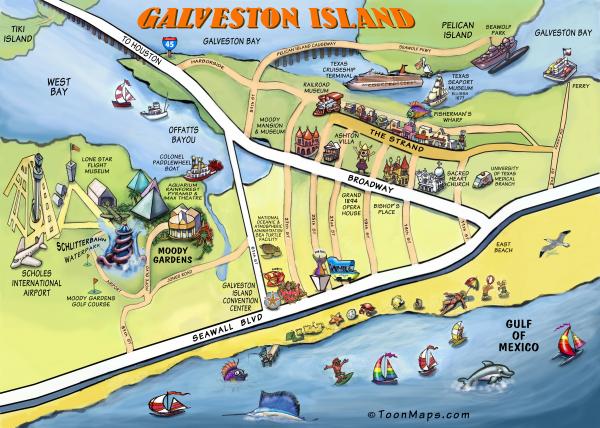
Study this map. Read the labels and understand what they mean. Read the instructions next to the map. Study the words in colour.


3.Understanding Diagram

*Diagrams explain how things work, describe a process or different parts of an object.

*They can use arrows to show movement or labels to name the parts.


4.Understanding Storyboards

*Storyboards are a set of quick graphics arranged in sequence along with the words spoken or any other special effects (music,lighting.etc) that are required.

*They are used to plan the details of a motion picture, an animation , a video or an interactive media sequence


READING COMPREHENSION

READING COMPREHENSION
Within this page,the complex processes involved in reading comprehension are divided into three categories (much like the National Reading Panel Report). The categories include vocabulary instruction, text comprehension instruction, and teacher preparation and comprehension strategies instruction. You'll also find useful websites that students can visit to practice their use of comprehension strategies with fiction and non-fiction texts at a variety of reading levels. 


Answer: Page 41-42

1.How high is Everest?
       A.8848 feet
       B.29028 metres
       C. 29,028 feet
       D. 8848 metres
 2.In what way does Mount Everest change annually?
       A.It is shrinking by a very small amount.
       B.It is getting a little wider.
       C.It is shifting slightly to the north.
       D. It is growing a very small amount.
 3.Mount Everset is in the mountain range call the________.
       A.Rocky Mountains
       B.Andes
       C.Himalayas
       D.Alps
4.Who wanted to climb Mount Everest "because it's there"?
       A.George Mallory
       B.Edmund Hillary
       C.Tenzing Norgay
       D.Junko Tabei
5.The first team to successfully reach the summit was__________.
       A.George Mallory and Andrew Irvine.
       B.Edmund Hillary and Tenzing Norgay.
       C.George Mallory and Edmund Hillary
       D. Tenzing Norgay and Andrew Irvine.
6.Since 1953,how many people have reached the summit? 
       A.about 20
       B.fewer than 600
       C.exactly 600
       D.more than 600
             

Answer: Page 59

A.Who is the central character of the Harry Potter books?
   - Harry Potter
B.Who is the evil wizard who fights against Harry?
   - Lord Voldemort
C.When did the idea for Harry'walk' into the author's head?
   - During her train trip from manchester to London
D.What was the firsr book in the Harry Potter series renamed as for the American market?
   - Harry Potter and Socerer's Stone
E.What does Harry learn to do in Hogwarts?
   - He learns to use magic and brew potions
F.Which platform does Hogwarts Express depart from?
   - Hogwarts Express departs from Platform 9 3\4

Excercise Online

http://www.thaiall.com/cgi/quizr.pl

วันอังคารที่ 24 กรกฎาคม พ.ศ. 2555

Skimming

*skimming is a reading technique that can help you to
  • read more quickly.
  • decide if the text is interesting and whether you should read it in more detail.
*Skimming is a fast reading technique.Use it to obtain the gist of a piece of text (i.e. to quickly identify the main ideas in the text)
Identifying Main Ideas
  • The main idea of a paragraph may be found in the first or last sentence, or even in the middle of the paragraph
  • If a main idea is repeated in a slightly different war, its meaning will often become clear.
  • Sometime,It is repeated in the closing sentence.
  • The main idea of a story tells what the story is mostly about. Details in a story provide more information     
     about the main idea 

วันพุธที่ 4 กรกฎาคม พ.ศ. 2555

Page 34 (Exercise A)

1. Bill and john both run the 100 m dash. Bill has won the race for the last three years. But he didn’t train as hard this year as he had fallen ill. This time John practiced regularly every day. On the day of the match, Bill and John line up to start.
What do you predict will happen next ?
a.       Bill will win the race.
b.      John will win the race.
c.       John will drop out the race.
Answer = B
2. Mort looked of out the window. He saw dark clouds gathering in the sky. Soon the clouds covered the sun and the wind began to blow. Just then Mort remembered that his mum had asked him to bring in the dried laundry from the garden
What do you predict will happen next ?
a.       Mort will play a video game with a friend.
b.      Mort will go out to the garden to fetch the laundry.
c.       Mort will go to the room to relax.
Answer = B
3. Brent is an Alaskan sled dog. He has a coat of heavy fur that helps keep him warm. He likes to stand by the fireplace when he gets cold. Brent was out in the snow all day long and got very cold.
What do you predict will happen next ?
a.       Brent will pull a sled through the snow.
b.      Brent will sleep in the snow.
c.       Brent will stand by the fire
Answer = C